




Program Overview
in subjects related to the study, design, and development of interactive technologies.

Certified Study Programme
the academic program has undergone official external evaluation and accreditation by HAHE.the Hellenic Authority for Higher Education (ΕΘΑΑΕ / HAHE)

Program Format
A blended ofrmat of online and face to face courses, combined with practical experience during the diploma thesis.
- 1st semester: 2 core and 3 elective courses for 30 ECTS
- 2nd semester: 1 core and 4 elective courses for 30 ECTS
- 3rd semester: diploma thesis for 30 ECTS

Program Duration
The minimum study duration is three (3) academic semesters, including the required time to complete the postgraduate Diploma Thesis. The maximum study duration amounts to six (6) semesters and does not include the September examination period of the third academic year.
Research Areas

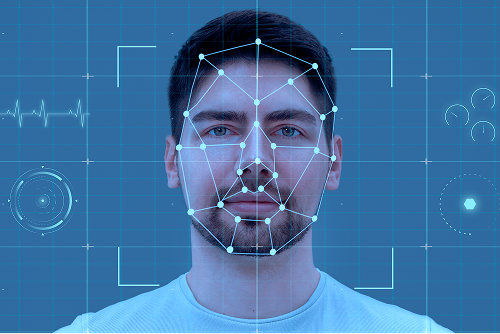
Behavioral Research
Understanding and assessing how the users interact with the interfaces
AI & Human Interaction
Developing intuitive interfaces for human-AI collaboration and investigating ethical implications of AI in everyday life.

Ubiquitous Computing
Designing seamless interactions with technology embedded in everyday environments and objects.

Augmented & Virtual Reality
Exploring immersive interfaces that blend digital information with the physical world to create new interactive experiences.
Research Labs & Facilities
USIDAS Laboratory
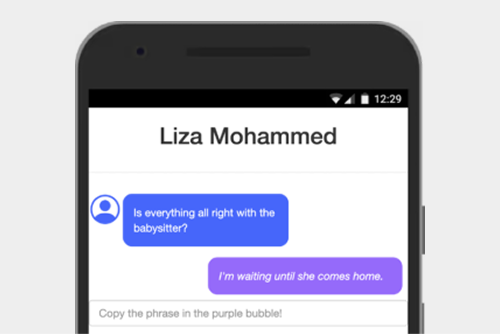
The USIDAS Laboratory at the Department of Computer Engineering & Informatics, University of Patras, led by Assoc. Prof. Andreas Komninos, focuses on mobile computing, augmented reality (AR), context-aware systems, and human-computer interaction. Its research combines advanced mobile technologies with intelligent interfaces and ubiquitous computing to create innovative, user-centred digital experiences.
USIDAS website: http://usidas.ceid.upatras.gr/
HCI Laboratory
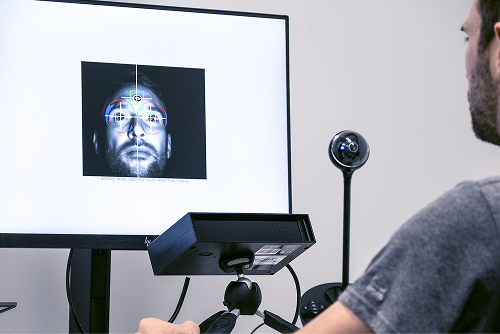
The HCI Laboratory specialises in the study, design and evaluation of interactive technologies and human-computer interaction, using advanced facilities such as a brain-computer interaction research room and eye-tracking apparatus to explore user behaviour, ergonomics, interface design, usability and cognitive workload, fostering creation of adaptive systems. The lab actively collaborates with academic and industrial partners to develop innovative interaction techniques that enhance user experience and support next-generation intelligent systems.
HCI website: https://hci.ece.upatras.gr/
Software Quality and Human-Computer Interaction Laboratory
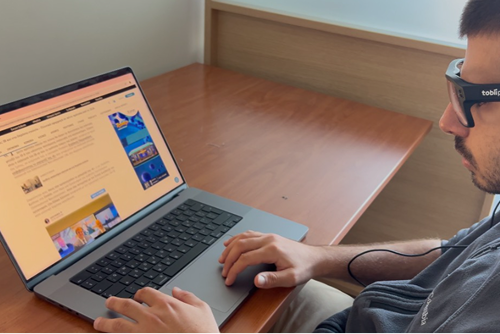
The Software Quality and Human‑Computer Interaction Laboratory (SQLab) at the Department of Computer Engineering & Informatics, University of Patras focuses on advancing research in software quality, including processes, metrics and tools, and human-computer interaction, covering interaction design, user-centred design and usability evaluation.
SQLab website: https://sqlab.ceid.upatras.gr/
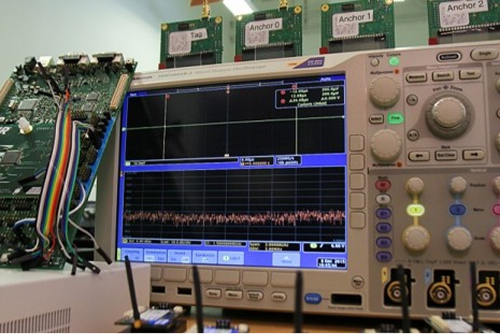
Wired Telecommunications and Information Technology Laboratory
The Laboratory of Wired Telecommunications and Information Technology at the Department of Electrical and Computer Engineering, University of Patras, directed by Prof. Konstantinos Moustakas, conducts advanced research in virtual and augmented reality (VR/AR), 3D graphics, computer vision, and interactive technologies. The lab focuses on developing innovative solutions that merge telecommunications with immersive computing.
WCL website: https://www.wcl.ece.upatras.gr/
Online tour to our facilities
Take a look at our facilities and watch the virtual tour of our campus
Meet Our Faculty

Avouris Nikolaos
Professor Emeritus
Nikolaos Avouris is a professor emeritus of Software Engineering and Human-Computer Interaction at the Electri...
- avouris@upatras.gr
- https://hci.ece.upatras.gr/people/
- University of Patras, Electrical & Computer Engineering Department

Chorianopoulos Konstantinos
Associate Professor
Konstantinos Chorianopoulos is a faculty member at the Department of Informatics of the Ionian University. He ...
- choko@ionio.gr
- http://users.ionio.gr/~choko
- Ionian University, Informatics Department

Daskalaki Sofia
Assistant Professor
Sophia Daskalaki is an Assistant Professor at the Department of Electrical and Computer Engineering of the Uni...
- sdask@upatras.gr
- https://www.ece.upatras.gr/index.php/en/ece-faculty/daskalaki-sofia.html
- University of Patras, Electrical & Computer Engineering Department

Fidas Christos
Associate Professor
Christos Fidas was born in 1976 in Munich, Germany. He graduated in 2000 from the Department of Electrical &am...
- fidas@upatras.gr
- https://www.ece.upatras.gr/fidas/
- University of Patras, Electrical & Computer Engineering Department

Komninos Andreas
Assistant Professor
Andreas Komninos is an Assistant Professor at the Division of Computer Software of CEID, University of Patras....
- akomninos@ceid.upatras.gr
- https://www.komninos.info/
- University of Patras, Computer Engineering and Informatics Department

Moustakas Konstantinos
Professor
Konstantinos Moustakas received the Diploma degree and the PhD in electrical and computer engineering from the...
- moustakas@ece.upatras.gr
- http://www.vvr.ece.upatras.gr
- University of Patras, Electrical & Computer Engineering Department

Rigou Maria
Associate Professor
Dr Maria Rigou holds a Diploma in Computer Engineering from the Department of Computer Engineering and Informa...
- rigou@upatras.gr
- https://dima.upatras.gr/metaptychiako/didaskontes/maria-rigkou/
- University of Patras, Management Science and Technology Department

Sintoris Christos
Laboratory Teaching Staff
Human-Computer Interaction, Location-based mobile games, learning technologies focusing on mobile devices, per...
- sintoris@upatras.gr
- https://hci.ece.upatras.gr/el/people/sintoris/
- University of Patras, Electrical & Computer Engineering Department

Sgarbas Kyriakos
Associate Professor
Kyriakos Sgarbas is an Assistant Professor at the Department of Electrical and Computer Engineering of the Uni...
- sgarbas@upatras.gr
- https://sites.google.com/site/sgarbaskyriakos/
- University of Patras, Electrical & Computer Engineering Department

Vasilopoulos Yannis
Laboratory Teaching Staff
Dr. Yannis Vasilopoulos is a faculty member at the Department of Computer Engineering and Informatics (CEID), ...
- vasilop@ceid.upatras.gr
- University of Patras, Computer Engineering and Informatics Department

Xenos Michalis
Professor Program Director
Professor Michalis Xenos is an active researcher in Software Engineering, Human-Computer Interaction (HCI), an...
- xenos@ceid.upatras.gr
- https://xenos.ceid.upatras.gr/
- University of Patras, Computer Engineering and Informatics Department

Evaluating Usability and Educational Effectiveness of a Serious Game for Programmers Using Alternative Interfaces and Types of Activities
Received best paper award
This paper presents a serious game that has been developed for programmers aiming to analyze and examine the effectiveness and the perceived usability of two different game interfaces. This game presents a drag-and-drop interface and a classical typing interface and towards this approach, four different versions of the same game were developed.
Kallirroi Zarkadoula, Michalis Xenos
Selected Paper Awards Publications
Best paper award for our student Maria Kounalaki
Best paper award for our student Kalliroi Zarkadoula
Best paper award for our student Semira Evangelou
What Our Alumni Say
Admissions
the future of human-computer interaction.